Basalt Mineral Makeup
This documentation provides a structured reference for interpreting the basalt mineral composition data presented by the geochemical modeling tool. The tool is designed to support research in enhanced weathering for carbon dioxide removal (CDR), soil fertility enhancement, and terrestrial biogeochemical cycling. It allows users to analyze basaltic mineral dissolution, cation release, and the potential for CO₂ sequestration through carbonate formation.
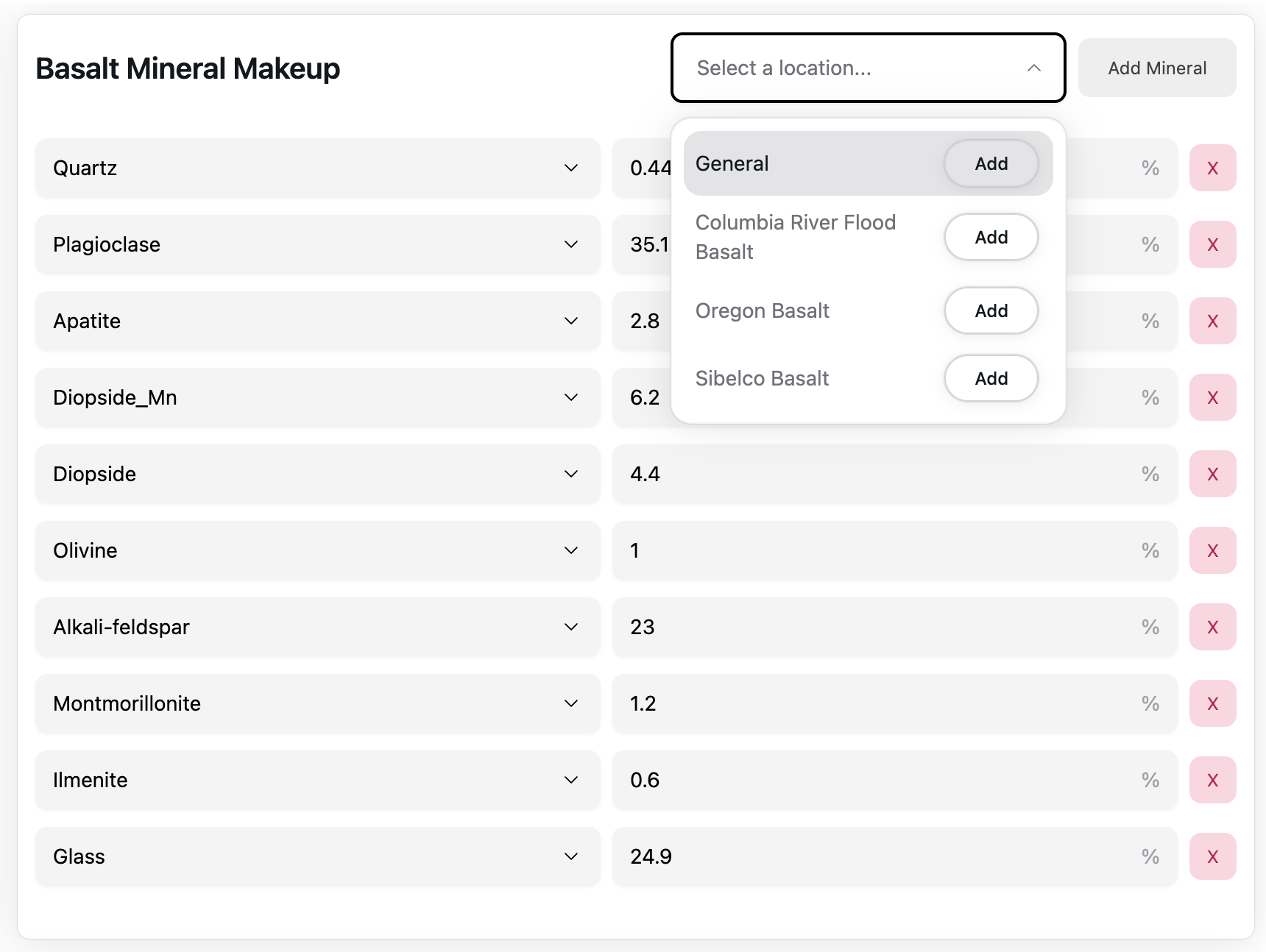
Overview of Basalt Mineral Composition
Fields in the Basalt Mineral Makeup Tool
Mineral Name
Each row represents a distinct mineral phase that contributes to the overall composition of the basaltic material. The minerals listed are commonly found in basaltic rocks and influence geochemical processes such as dissolution kinetics, secondary mineral formation, and nutrient release.
Mineral Percentage (%)
The percentage field represents the proportion of each mineral relative to the whole rock. This value is critical for assessing the dissolution potential of the rock and its contribution to chemical weathering and CO₂ drawdown. The sum of all mineral percentages should ideally total 100%.
Adding and Removing Minerals
Add Mineral Button
Users can add additional minerals to the model to refine the geochemical simulation. This feature is useful for customizing basalt compositions and testing alternative mineral assemblages for specific environmental conditions.
Remove Mineral (X Button)
Each mineral entry has a corresponding remove button, allowing users to exclude specific minerals from the composition. This can be useful when adjusting basalt formulations to match observed field compositions or experimental setups.
Selecting a Location
The tool allows users to select a location from a predefined list, which updates the basalt mineral composition accordingly. Locations represent different basaltic formations that exhibit variations in mineralogy due to differing geological histories and formation conditions. Examples include:
- General Basalt - Represents an averaged composition from multiple basalt sources.
- Columbia River Flood Basalt - Derived from a large igneous province in North America, known for its high plagioclase and pyroxene content.
- Oregon Basalt - Represents basalt formations from Oregon, characterized by variations in olivine and plagioclase concentrations.
- Sibelco Basalt - Reflects an industrial basalt source with potential variations in mineralogy due to processing.